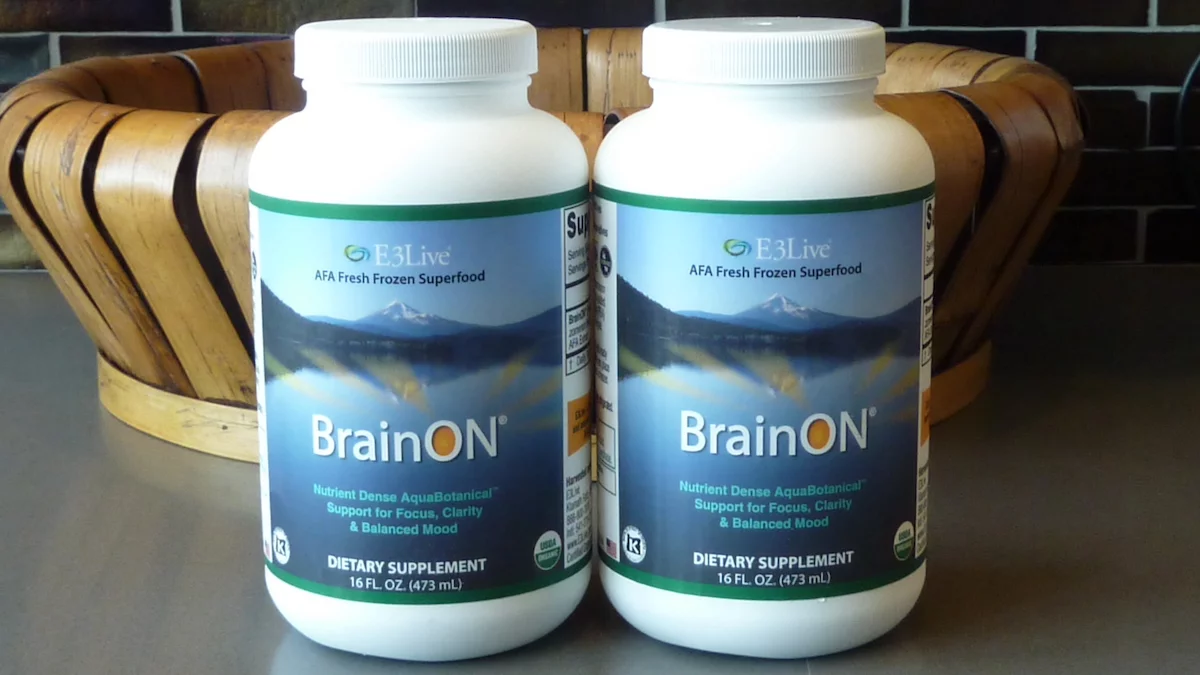

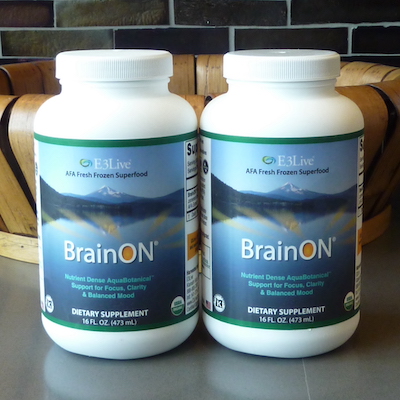

BrainON is certified organic, fresh-frozen AFA (Aphanizomenon flos-aquae) with a concentrated, aqueous, organic extract of Phenylethylamine and Phycocyanin. Learn more.
In the organic ingredient world, a significant transaction was announced this morning.
SunOpta, a global company focused on plant-based foods and beverages, sold its organic ingredient sourcing and production business, Tradin Organic, to Amsterdam Commodities N.V. (Acomo) in a debt and cash-free transaction worth €330 million.
"My Everyday, Must-Have Green Organic Aquabotanical"
The best testimonial that I can give is that I drink this every single day, as it impacts my mood in an incredibly positive way.
E3Live + BrainON is certified organic, fresh-frozen AFA (Aphanizomenon flos-aquae) with a concentrated, aqueous, organic extract of Phenylethylamine and Phycocyanin.
One of the reasons that many of us purchase organic is because we don’t want to put food into our bodies that contains synthetic chemicals.
Yet even though we may not eat conventionally-grown food ourselves, we still need to be very aware (and concerned) about what is going on in the non-organic world. Why?
Because the toxic chemicals that are sprayed on conventionally-grown food end up in the water supply.
And the EPA is not doing its job when it comes to protecting the integrity of our water.
For those of us who are extremely committed to health and wellness, the reality is that maintaining this lifestyle is very difficult when traveling.
At home, we have much greater control over our environment, but we lose that control when we go on the road, regardless of how aesthetically pleasing the living conditions may be.
Fortunately, the world is starting to change, and there are now businesses entirely focused on meeting the needs of the wellness-minded traveler.
One such company that I recently discovered is Pure Wellness, whose main offering is a Pure Room — a hotel room unlike anything I have seen before.
One question that I get a lot is “How should a person get started with organic food?” One complaint I hear a lot is that organic food costs too much.
Let me both answer this question and address this complaint with a story.
Last week, Brian, a new friend of mine, came to me for some food-related advice. He wanted to know what he could be doing to eat healthier, as he was “crashing” in the middle of the afternoon. Brian was very concerned that his eating habits were negatively impacting his ability to perform at work, which would impact his ability to make money.
He did not know much about organic and was very concerned about the price. When I started talking about organic food, the first words out of his mouth were “Hey, I don’t make $20,000 per month.”
Brian went on to tell me about the fast-food breakfasts that he had been eating and he didn’t think it was the cause of his problem.
When people talk about organic food, we mostly focus on the importance of eating food that is free of synthetic chemicals, genetically-modified ingredients and artificial growth hormones.
Yet, what we also need to be mentioning is that conventionally-grown food means that our soil is getting sprayed with an astronomical amount of toxic pesticides, which ends up polluting our public water supply.
According to the EPA, we use about 1.1 billion pounds of chemicals per year, 80% of which are used for agricultural purposes.
And what impact has this had on the quality of our public water supply?
If you ever go to a talk by Dr. Brian Clement, founder of the Hippocrates Health Institute and the person in this video discussing the merits of Green Juice vs. Green Smoothies, you can be guaranteed to hear this: eat and juice sprouts.
The reason that he is saying this is because sprouts have incredibly important health properties. They have very high levels of nutrients and enzymes, which provide the body valuable energy to detox and strengthen the immune system.
When I was at EARTH University in Costa Rica, I got a chance to learn everything about sustainable banana production – from how they are grown in the fields to how they are shipped to the U.S.
In this video, I’ll take you onto the banana plantation of EARTH University and show you the issues that they have to deal with when growing bananas in such humid conditions.
What’s important to note is that it took EARTH University many, many years for its sustainable bananas to reach profitability and the school was told by consultants that the program wasn´t going to work.
EARTH University’s president refused to give up because he knew that this was the right way to do business – for the environment, for the farm workers, for consumers – even though his bananas were more expensive than conventionally-grown ones.
Whole Foods recognized the importance of what EARTH University was doing and the values that it stood for, and decided to distribute the school’s bananas throughout the U.S. Not only has this partnership been critical for the long-viability of EARTH University’s banana program, but the strong demand for the school’s bananas has proven that sustainability is good business.
Without question, EARTH University’s bananas are the best that I have ever eaten. If you have the chance to buy them, definitely do so.
You’ll be eating a fantastic product and also be supporting an incredibly important endeavor for sustainability.
Also, being such a huge fan of bananas, I can’t tell you how interesting this day was for me. Enjoy!