







Living Maxwell
Must-Read
Why Organic is a MUST for Women — Pesticides Linked to Lower Chance of Pregnancy and Higher Risk of Pregnancy Loss


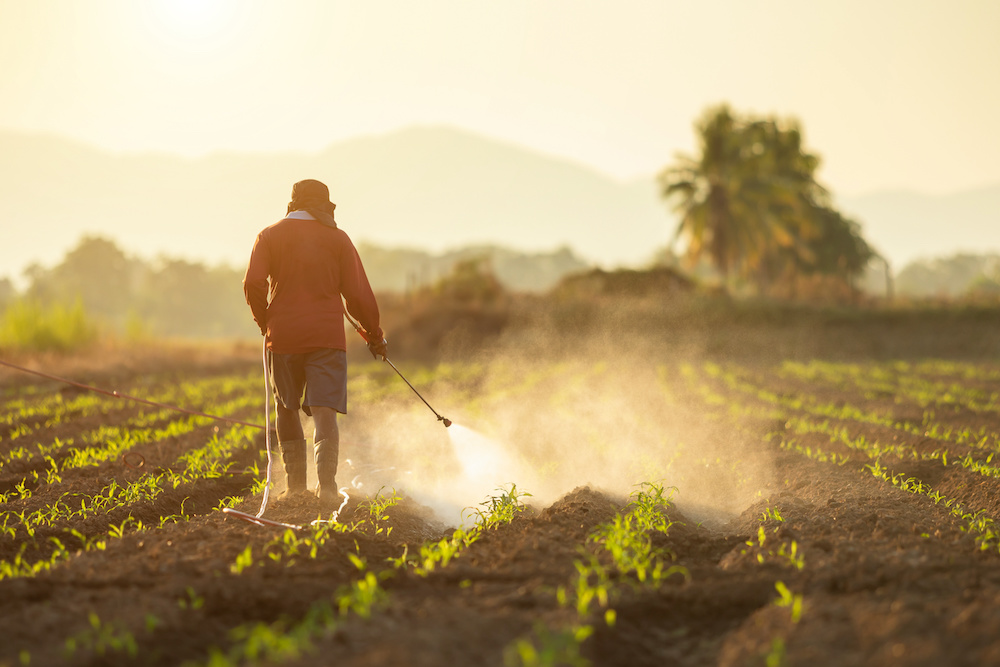
Each year when the Environmental Working Group (EWG) releases its “Dirty Dozen” – the 12 most pesticide-laden fruits and vegetables that people should avoid – the major pesticide companies and their front groups launch a major PR campaign demanding that EWG stop publishing these annual lists, insisting that chemicals are not harmful.
The organic industry and health advocates completely scoff at these ridiculous claims. Furthermore, the State of California has declared that glyphosate, the most widely used chemical in the world and one that is routinely sprayed on our food supply, causes cancer.
And now we have a new report out of Harvard which reinforces the notion that pesticides can cause real harm, particularly for women.
According to a study published in the journal JAMA Internal Medicine, women undergoing infertility treatment in the U.S., who were consuming more fruits and vegetables with high amounts of pesticide residue, were associated with a lower chance of pregnancy and a higher risk of pregnancy loss.
Dr. Yu-Han Chiu, a research fellow in the department of nutrition at the Harvard T.H. Chan School of Public Health and first author of the study, said,
“Most Americans are exposed to pesticides daily by consuming conventionally grown fruits and vegetables. There have been concerns for some time that exposure to low doses of pesticides through diet, such as those that we observed in this study, may have adverse health effects, especially in susceptible populations such as pregnant women and their fetus, and on children. Our study provides evidence that this concern is not unwarranted.”
Not surprisingly, when women switched to fruits and vegetables that had low pesticide residues, the odds of pregnancy and giving birth increased.
“Although we did find that intake of high-pesticide-residue fruits and vegetables were associated with lower reproductive success, intake of low-pesticide-residue fruits and vegetables had the opposite association,” said Dr. Yu-Han Chiu.
IN SUMMARY
What this all points to is that when it comes to fruits and vegetables, pregnant women should be eating as much organic as possible.
And despite what chemical industry front groups have to say, such as The Alliance for Food and Farming and Safe Fruits and Veggies, pesticides can cause real harm.
A few things to leave you with:
1) If pesticides are causing these pregnancy problems for women and their fetuses, imagine the other problems that they are causing.
2) Even though this study was about women, men should not think that pesticides can’t cause them harm as well.
For men, pesticides have been linked to lower sperm count and quality.
3) If you are eating fruits and vegetables, even organic ones, you must use a fruit and vegetable wash.
The only one I use and recommend is from Vermont Soap Organics called Produce Magic.