

Warning: Think Twice About Buying Any Organic Food that Contains DHA or ARA

Written by Max Goldberg on December 12, 2011. Follow Max on Twitter: @livingmaxwell.

Earlier this year, I wrote a post about DHA (Docosahexaenoic acid), an unapproved additive in certain organic foods and organic milk.

Companies were adding DHA and ARA (Arachidonic acid) into their products because they are omega-3 and omega-6 fatty acids, respectively, and also provide a unique marketing angle. (A majority of the organic food companies are sourcing their DHA and ARA from Martek Bioscienes Corporation.)

This is all fine and good except for the fact that Martek’s DHA and ARA are synthetic and something antithetic to everything that certified organic stands for.

At the recent USDA/National Organic Standards Board meeting in Savannah, Georgia, the issue of DHA and ARA was discussed and voted on. Needless to say, the decision was a big loss for organic consumers.

The National Organic Standards Board decided that DHA and ARA would be allowed in certified organic products but that no hexane could be used in the processing of these additives. Hexane is a neurotoxin, a by-product of gasoline in petroleum and is considered a hazardous air pollutant by the EPA.

There are two problems here.

1) Even though hexane is no longer permitted, the ruling did not specify that other “synthetic solvents”, which have the potential to be more dangerous, could not be used in the processing of DHA or ARA.

2) The Organic Consumers Association is reporting that Martek’s DHA and ARA still do not meet the standards of certified organic. Why?

A detailed review of Martek’s patents reveal that the company is:

*** Using genetic-modification in the manufacturing process for DHA –> something not allowed under USDA certified organic regulations.

*** Using genetically-modified corn in the manufacturing process for DHA –> something not allowed under USDA certified organic regulations.

It is an understatement to say that this situation is appalling.

WHAT TO DO

Without a question, I am avoiding all certified organic products that use added DHA or ARA.

As I mentioned in my previous post about this subject, The Cornucopia Institute provided a list of some products that contain Martek’s DHA or ARA. They are:

For Children and Adults

Wegman’s Organic Yogurt (Fruit on the Bottom Super Yogurt)
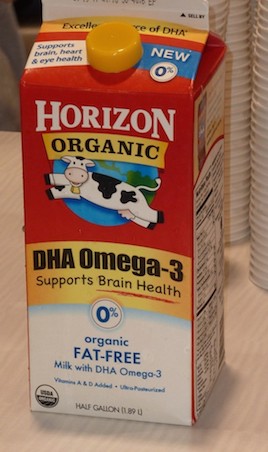
Horizon Organic Milk
Stremicks Heritage Foods Organic Milk
ZenSoy Soy on the Go

Baby Food (select products contain Martek’s DHA)

Happy Bellies
Tasty Baby Organic Infant Cereal

Infant Formula (all organic infant formula products contain Martek’s DHA, with the exception of Baby’s Only Organic Toddler Formula)

Bright Beginnings Organic
Earth’s Best Organic
Parent’s Choice Organic
Similac Organic
Vermont Organics

If you know anyone who has infants or babies, please forward this post to them. It is ESSENTIAL that they are not feeding their children anything that contains questionable ingredients.

Unfortunately in this case, the National Organic Standards Board has been influenced by big corporations and is not doing enough to protect organic consumers. 

 

Other Posts You May Enjoy

20 Comments

  1. Thanks for the heads up. I appreciate the excellent resource your blog is, especially as I have children and do NOT want them consuming these things.

    Written by Charlotte on December 12, 2011 @ 11:39 am
  2. Hi Charlotte,

    My pleasure and I am glad to know that the information I am providing is useful to you and your family.

    Live well,
    Max

    Written by Max Goldberg on December 12, 2011 @ 11:52 am
  3. Things like this make people question the real benefits of organic products. I don’t know why any decent organic certified producer would risk its reputation for a few shady ingredients they try to squeeze in through the back door. But at least there are people paying attention. Thanks.

    Written by Jen on December 28, 2011 @ 7:43 am
  4. Hi Jen,

    There is no question that it does put a damper on organics.

    It is the classic debate of “corporate organic” and whether values get compromised once a company gets large. At places like Stonyfield, they do not. At other large companies, they do.

    Thanks for supporting organic food.

    Live well,
    Max

    Written by Max Goldberg on December 28, 2011 @ 3:18 pm
  5. I just received the following from HappyFamily, makers of HappyBellies:

    Dear Concerned Consumer,

    Hello from HAPPYFAMILY, and thank you for inquiring about our use of DHA
    in our HAPPYBELLIES whole grain cereal.

    We feel that you as an ethical consumer are being misled and our good name
    is being abused by an outside party. It is very difficult as this
    company’s founder and a parent myself to see these unfounded allegations
    regarding GMOs, so I wanted to respond to you personally.

    First and foremost, every decision we make is based on socially
    responsible ideals that business can positively impact our world,
    especially with our ingredient sourcing. It has been a personal goal of
    mine since day one to support sustainable agriculture. Our DHA is sourced
    from the safest and most sustainable source: algae. It does not contain
    harmful mercury found in fish oils, and most importantly, no genetic
    modification is used in this process. None whatsoever. This was recently
    confirmed by the U.S. National Organic Standards Board. If this DHA had
    ever involved genetic modification, we never would have included it in our
    products.

    You can find a detailed FAQ about DHA available on our website at:
    http://www.happybabyfood.com/what-is-dha. If you would like more
    scientific information about the process, we are happy to provide it.

    Our company was founded on the mission of doing the absolute best for our
    children by giving them access to optimally formulated organic nutrition.
    We do not use GMOs in any of our products, including the HAPPYBELLIES
    cereal. It says this clearly on the label. Our own children have grown up
    on HAPPYBELLIES, which we believe is the most nutritious cereal in the
    marketplace with DHA for brain and eye development and pre and probiotics
    for digestive wellness as well as organic oats, amaranth, quinoa and brown
    rice. We were the first baby food company to create a probiotic cereal,
    and the first organic baby food company to use DHA, which is a building
    block for our children’s growing brains and eyes during a time they need
    it most.

    I hope this email sheds more light on this topic and clarifies our
    position – we too believe GMOs are not meant for our babies’ growing
    bodies. We believe this so strongly that we have made it our life’s work
    to create a truly HAPPY brand to ensure parents have the safest and
    healthiest options for their children.

    If you still have any questions or concerns, we are more than happy to
    speak with you further. Please send any additional comments to
    parents@happyfamilybrands.com.

    Happy New Year from your team at HAPPYFAMILY!

    Most sincerely,

    Shazi Visram
    Founder and CEO, HAPPYFAMILY

    HAPPYFAMILY
    139 Fulton St. Ste. 907
    New York, NY 10038
    O: (212) 374-2779
    F: (212) 602-0104

    Written by Marcello Aurelio Lanfranchi on December 30, 2011 @ 3:18 pm
  6. Hi Marcello,

    I stand by my post and Shazi’s letter does not comfort me in the least or change my opinion at all.

    The reality is this. The two major watchdogs in the organic food industry, Organic Consumer Association and The Cornucopia Institute, were both appalled and shocked that the USDA/NOSB would allow DHA in its current form.

    Furthermore, as per the links that I provide in my post, they believe the process that Martek employs to make DHA uses GMOs.

    Would I feed any family member of mine a certified organic product that contains added DHA? Never.

    Live well,
    Max

    Written by Max Goldberg on January 1, 2012 @ 11:45 am
  7. Max,

    Thanks for the information. As a concerned parent I applaud the effort to get the word out on deceptive practices. I wish, however, that your article provided some recommended alternatives. I’m particularly interested in the infant formula category. Alternatives would be appreciated.

    Thanks,
    David

    Written by David on August 29, 2012 @ 5:14 pm
  8. Hi David,

    I appreciate the feedback. Milk alternatives – the organic milk that doesn’t have DHA/ARA, there are plenty of them out there – Stonyfield, Organic Valley, other local organic milk producers. Infant formula is an area that I will need to research further.

    Thanks for your input.

    Live well,
    Max

    Written by Max Goldberg on August 31, 2012 @ 10:41 am
  9. Hi Max – any info on powdered organic baby formula that is safe for babies to consume? The “Baby’s Only brand supposedly has brown rice syrup as an ingredient, and that has been implicated in arsenic levels in the formula. Any new research or recommendations?

    Thank you very much – Francine

    Written by Francine on September 14, 2012 @ 2:06 am
  10. Hi Francine,

    I don’t have any at this point. However, I don’t understand why a baby needs any sweetener, whether it is brown rice syrup or something else. If I had an infant, I would look for an organic one that didn’t have anything sweet in it.

    Live well,
    Max

    Written by Max Goldberg on September 15, 2012 @ 8:59 am
  11. Max,
    In your opinion, what do you think is the BEST option for our children? My 6 month old is starting rice cereal for the first time.. I have to admit in browsing the isles, I found myself being pulled in by the marketing of the added choline in HappyBellies and bought the brown rice cereal with added DHA. Would you advice using organics (without added DHA), non-organic baby foods, or making them ourselves? I also know they have been finding arsenic in rice and other organics, but I guess that’s a whole other story.. Thanks!

    Written by Natasha on October 15, 2012 @ 6:55 pm
  12. Hi Natasha,

    I would never feed my child a Happy Bellies product that contains added DHA. Never. This is a company that I do not trust at all.

    Even though added DHA is an approved ingredient by the National Organic Standards Board, it is nonetheless an incredibly controversial ingredient and many people believe that genetic modification is used in the process.

    With such controversy, why would anyone take the risk of feeding it to their infants? I wouldn’t.

    If I had a child, I would feed him/her nothing but organic and make as much as the food as I could.

    Buying packaged organic baby foods is ok if you don’t have time or are on the run. But it should not be the norm. Home cooked meals from whole, real foods is the ideal situation. Again, a lot comes down to time, money, and accessibility.

    I hope this helps.

    Live well,
    Max

    Written by Max Goldberg on October 17, 2012 @ 8:38 pm
  13. “However, I don’t understand why a baby needs any sweetener, whether it is brown rice syrup or something else. If I had an infant, I would look for an organic one that didn’t have anything sweet in it.”

    I’m guessing you’ve never tasted breastmilk, then.

    Written by Lars on November 2, 2012 @ 12:51 pm
  14. Hi Lars,

    I find your statement to be ridiculous. That is like saying “kids won’t drink green juice because it doesn’t taste good. They should drink soda because it tastes better.”

    Kids/infants need will learn to adapt to and crave the nutritious foods that we give them.

    Live well,
    Max

    Written by Max Goldberg on November 2, 2012 @ 2:59 pm
  15. No, it’s more like saying “infants, not kids, cannot reason or really understand their world and are likely to refuse food that is too different from what is natural.” Doesn’t matter how healthy it is if its unrecognizable as food to them, and breastmilk is sweet for a reason.

    Written by Lars on November 2, 2012 @ 3:14 pm
  16. Either way your straw man argument illustrates your lack of experience with infants, at least if not children in general. Glucose is an important part of breastmilk and is included in formula preparations for a reason. Is GMO corn syrup a good substitute? Hell no.

    I don’t disagree with anything else you’ve said, nor am I attacking your beliefs, just pointing out that infant nutrition may not be in your wheelhouse.

    Written by Lars on November 2, 2012 @ 3:44 pm
  17. Lastly: you won’t find infant formula, organic or otherwise, without sweeteners for the above illustrated reasons, so your point is moot.

    Written by Lars on November 2, 2012 @ 3:46 pm
  18. Max,

    Lars’ comment is spot on – breastmilk is largely comprised of fructose, along with other essential fats. That gives it a sweet taste, which infants respond well to.

    If you feed your child something that is totally alien to what they’re expecting, then they will refuse it. Not to mention, the fructose is there for a reason – it’s a dietary requirement for them.

    It’s also pretty rude to tell someone that they’re being ‘ridiculous’ when they have a different opinion and then to straw man their response.

    Jim

    Written by Jim on November 2, 2012 @ 5:08 pm
  19. http://www.ncbi.nlm.nih.gov/pubmed/392766

    Breastmilk composition link.

    Written by Jim on November 2, 2012 @ 5:09 pm
  20. I stand corrected. My apologies.

    Written by Max Goldberg on November 2, 2012 @ 6:59 pm

Post a Comment